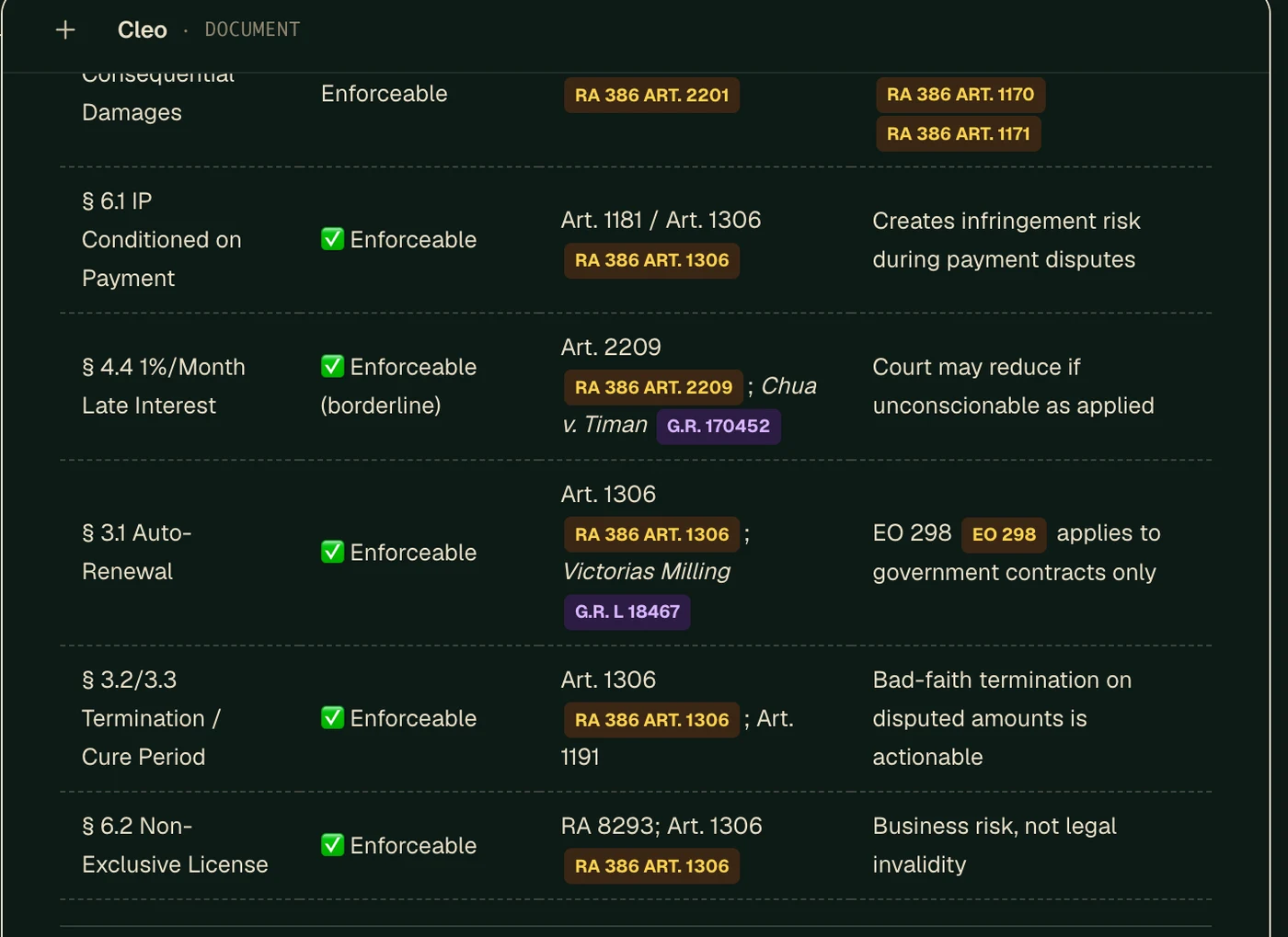
Document intelligence
Surface the clauses, dates, and parties that matter — across every file in a matter.
Meet Causa
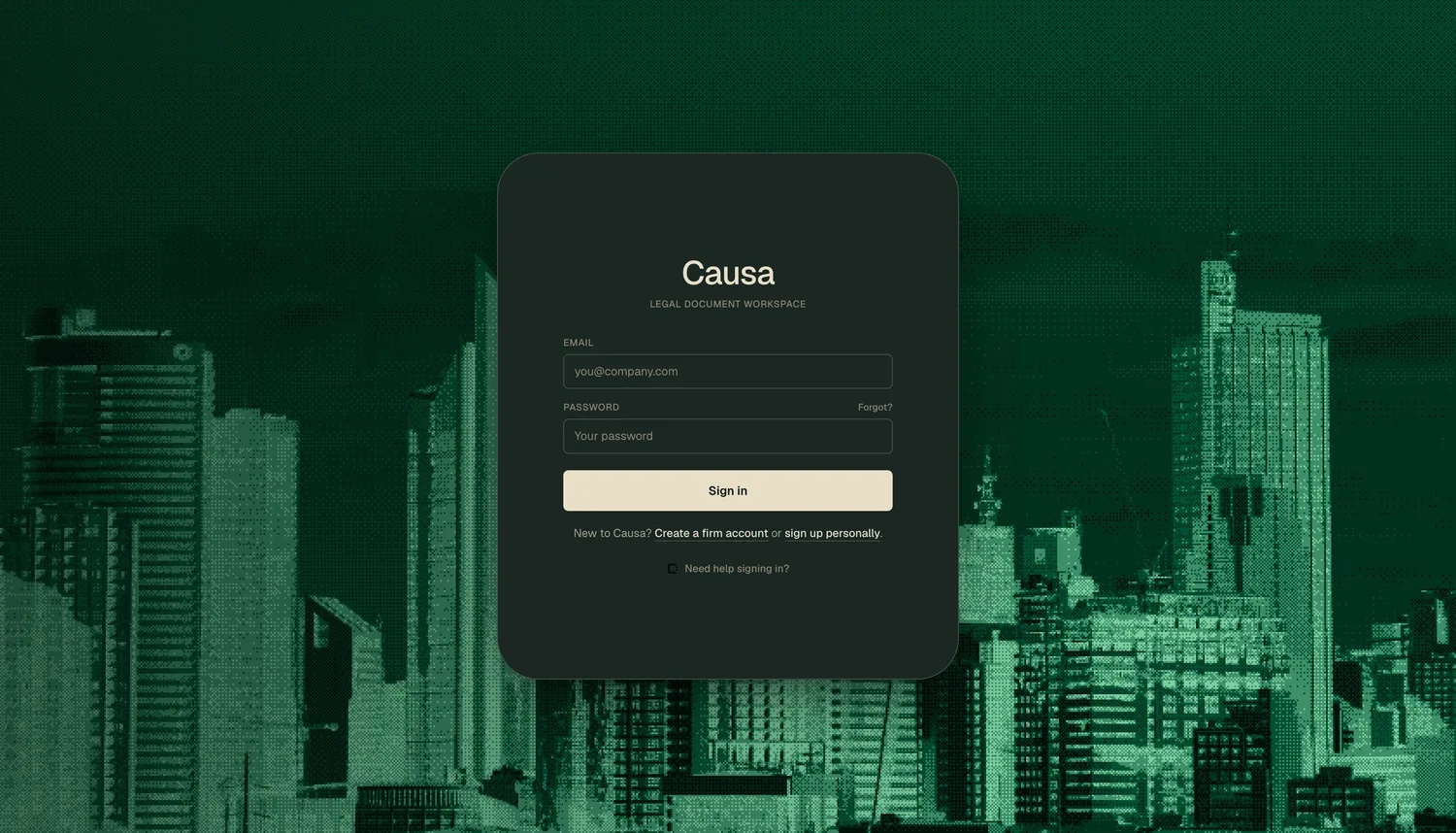
The AI workspace where a Philippine firm runs the whole matter — research, drafting, and the case file, in one place.
Built on enterprise-grade infrastructure
From the team
Causa is shaped in close partnership with Philippine practitioners — litigators, corporate counsel, and the staff who keep a matter moving. Every workflow we ship is tested against the way real cases are actually run, not an idealised version of them.
We believe legal software should defer to the lawyer’s judgment and quietly carry the load around it: organising the file, surfacing the right precedent, keeping the record straight. That principle guides what we build and, just as often, what we choose to leave out.
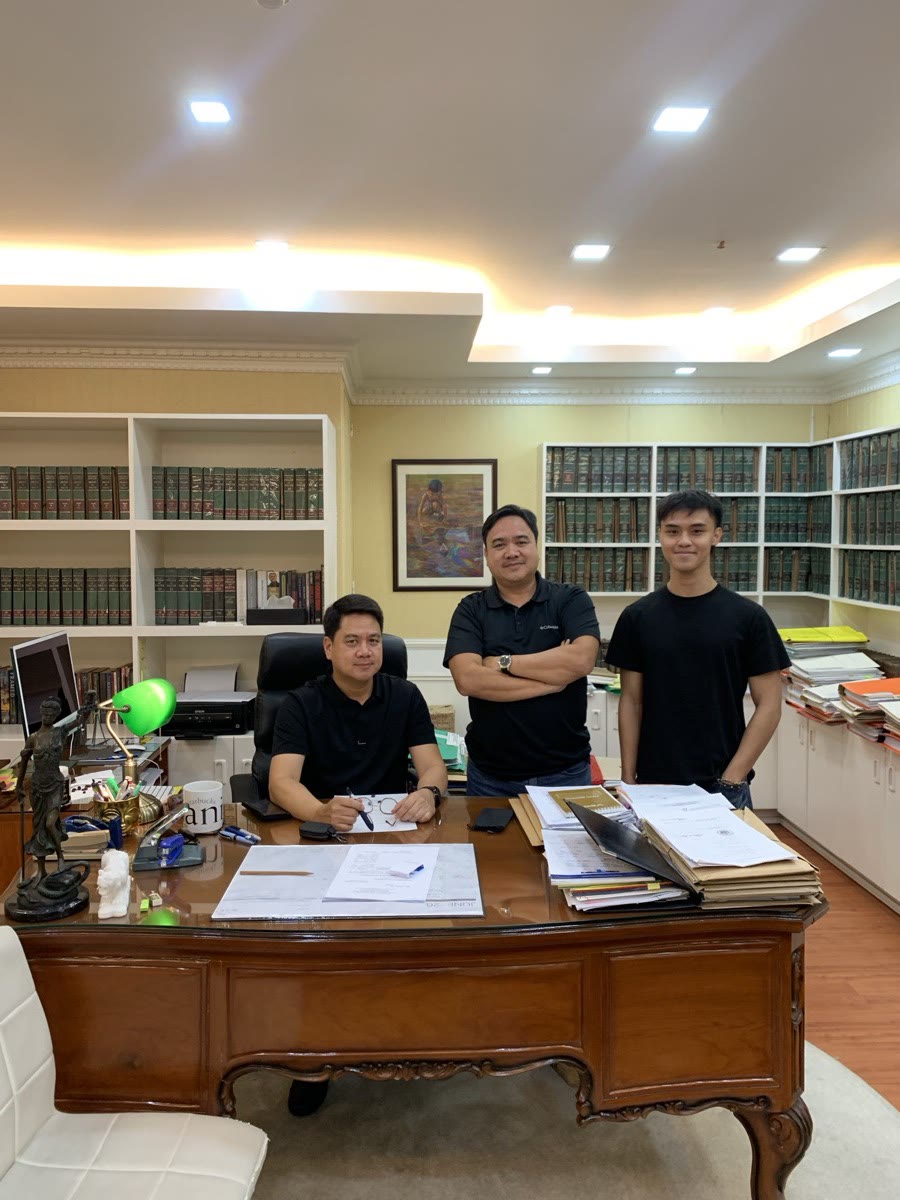
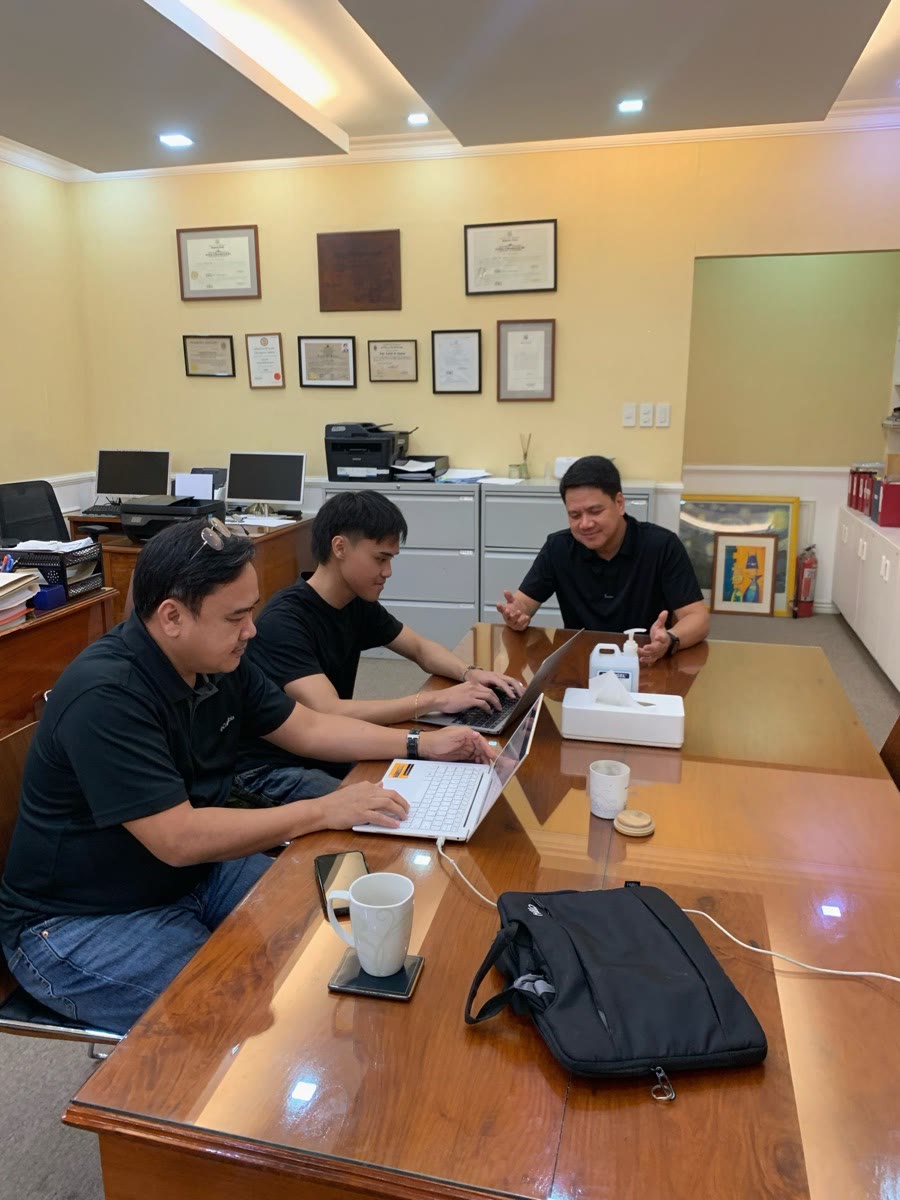
Atencia Law Office
The platform
One workspace for the whole matter.
Surface the clauses, dates, and parties that matter — across every file in a matter.
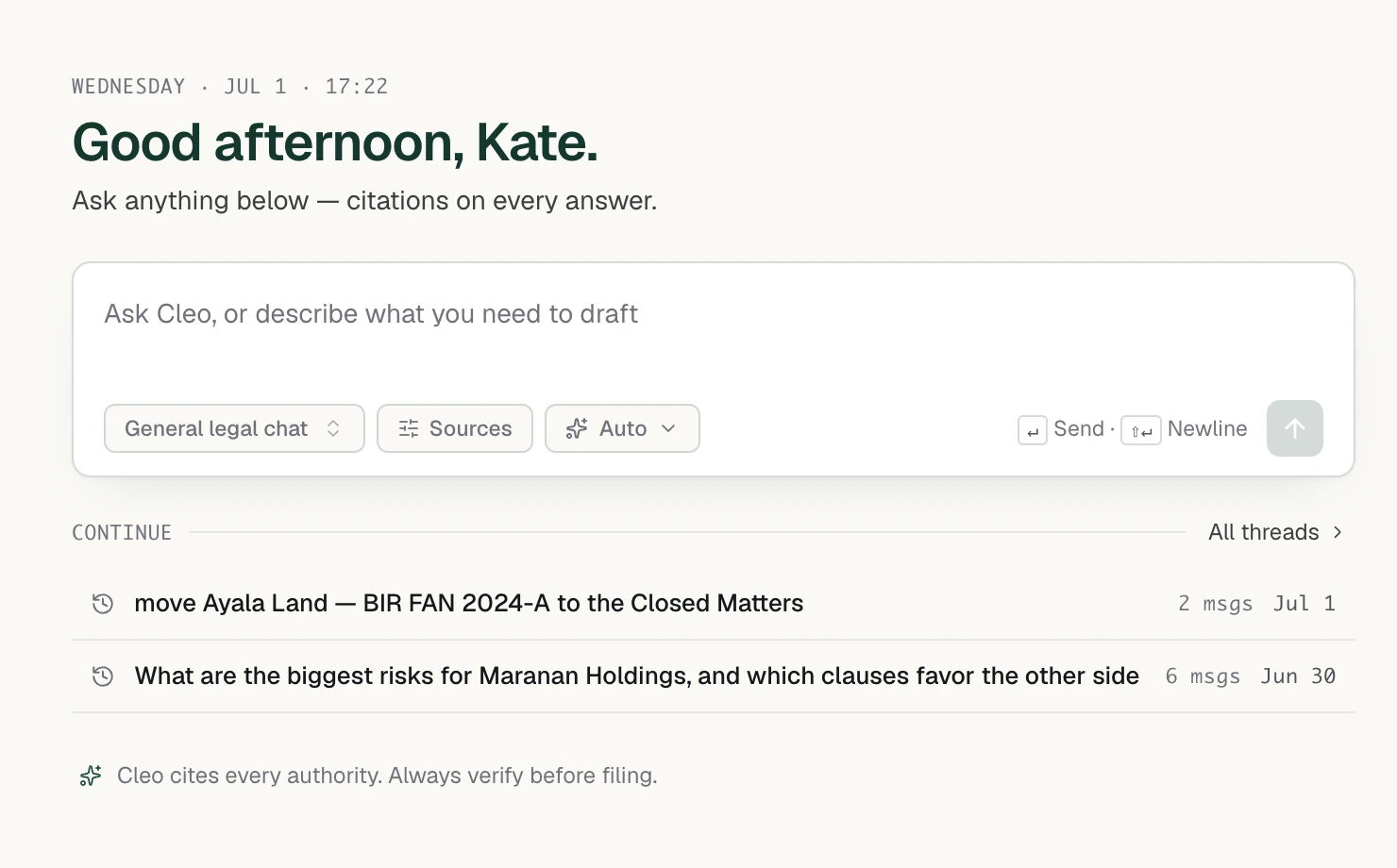
Ask in plain language. Cleo reads the record and drafts with you, grounded in your files.
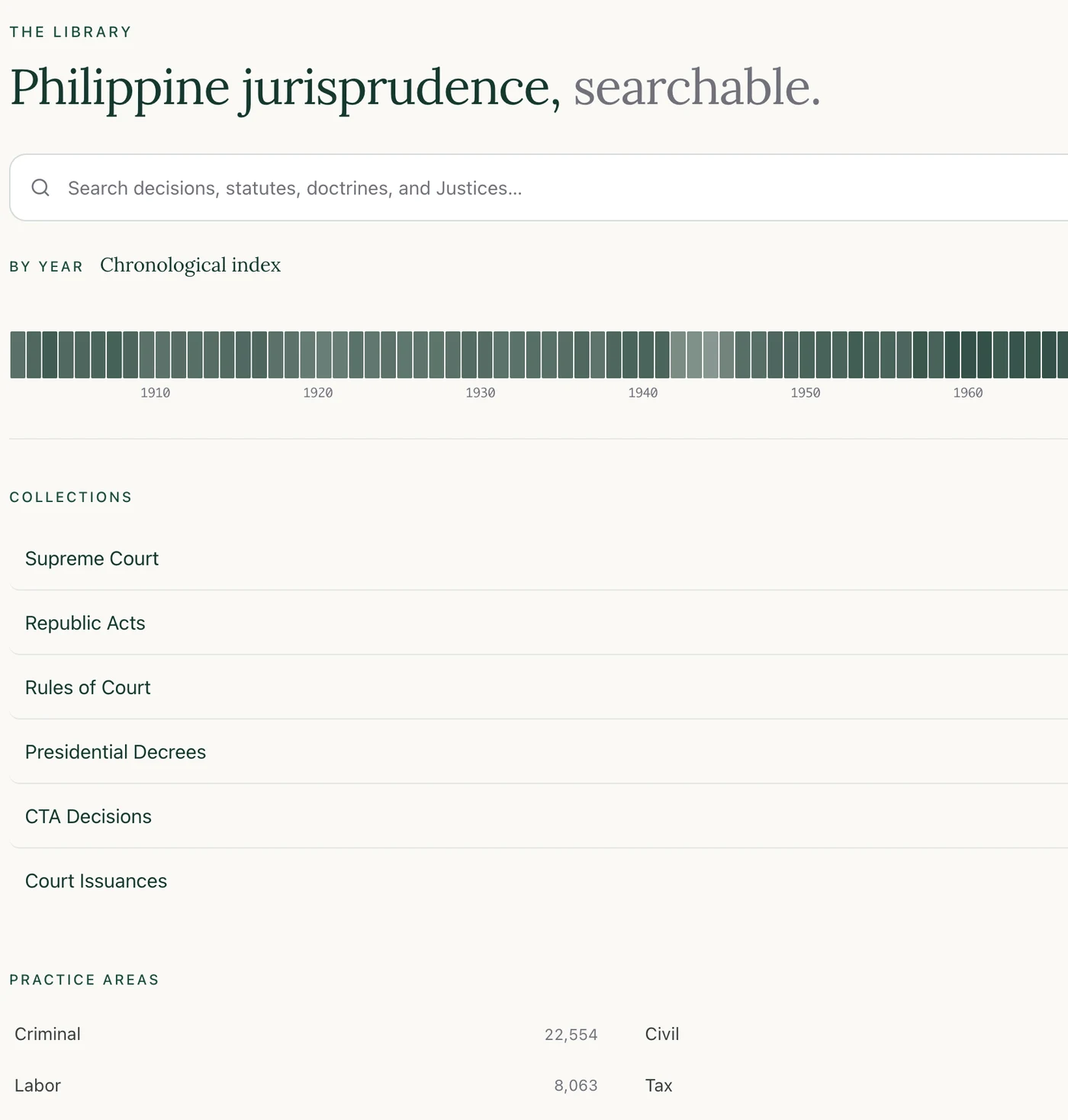
Search Philippine jurisprudence and statutes, with citations you can trace back to source.
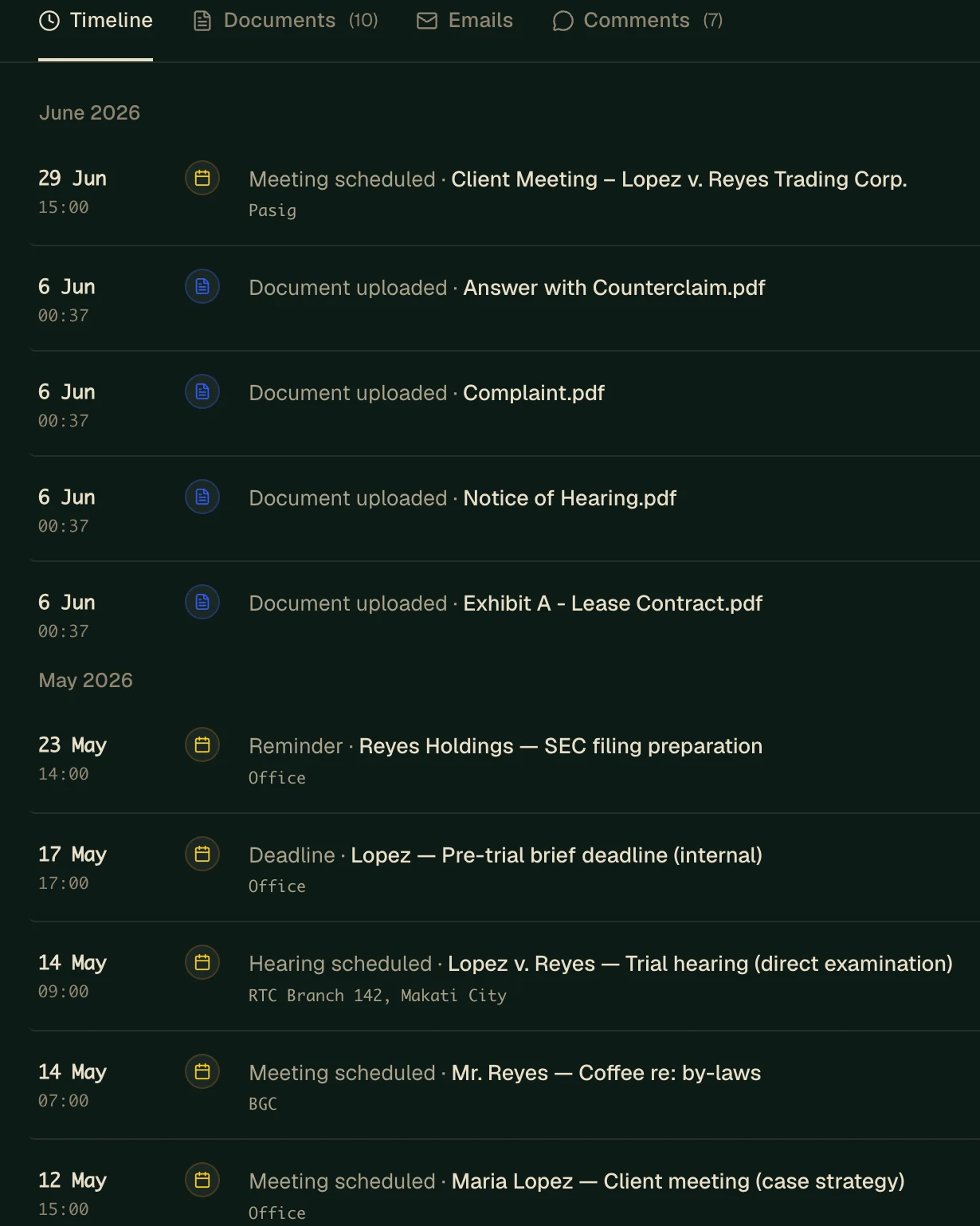
Track parties, deadlines, and tasks for the whole team in one shared workspace.
Across the firm
Causa handles complex legal work end-to-end — from intake to last-mile delivery, across every practice area.
Draft pleadings, track deadlines, surface precedent.
Review contracts and run due-diligence at speed.
Parse BIR rulings and assemble compliant filings.
Analyze facilities and flag covenant risk.
Check policies against the Labor Code.
Track filings and monitor infringement.
Review titles, leases, and transfer documents.
The evidence
The numbers are already in — from abroad. In controlled studies, generative AI made lawyers 50–130% faster on core work like drafting and analyzing complaints, and quality held or improved rather than slipping.
Almost all of that progress is happening overseas, and almost all of it is AI for research alone. Causa is built for Philippine firms — across the whole workflow, from first-draft pleadings to case files, review, and matter management. We’re pioneering AI-native practice here, not just faster search.
0 hrs
projected to be freed per lawyer, every year, at the current pace of AI adoption.
Thomson Reuters, Future of Professionals 2025
of routine work freed per lawyer, each week
in lawyer time freed each year — an international benchmark
faster on first-pass drafting and review
Based on international studies of AI in legal work — Thomson Reuters’ Future of Professionals 2025 (≈5 hrs/week and ≈$19K in time freed per lawyer) and controlled trials showing 50–130% faster drafting with quality holding or improving. No Philippine-specific benchmark exists yet; these figures illustrate the opportunity as local firms adopt.
We see a Philippines that leads. For too long, the future of legal work has reached us secondhand, arriving late and borrowed from elsewhere. We believe Filipino firms can help write it instead, practising with a speed and precision that sets the standard rather than chases it.
This is a turning point in the profession. The lawyers who embrace what this technology offers, whether ten years or forty into practice, will move faster and reach further than those who hold back. We want that advantage in Filipino hands: the power to put AI to work across the whole of a practice, not only for research, but in the daily work itself.
Most tools stop at knowing Philippine law. Our philosophy reaches further. Causa is built to understand how a firm actually works: its preferences and its style, the way its lawyers draft, argue, and speak with a client. The law is only the starting point. How your firm practises it is what we set out to learn.
A firm’s quality was never its name. It is the people within it, and the tools that let their work rise. We build technology that amplifies a lawyer and never stands in for one, so judgment and accountability remain with the professional whose name is on the pleading. The future of legal work here is not fewer lawyers. It is Filipino lawyers, empowered by the best the world offers, doing the finest work of their careers.
Signed, the founders
Client files stay encrypted, isolated per firm, and backed by complete audit trails — so sensitive matters stay confidential and accountable.
Read the paper: how Cleo is built to be checked →Aligned with the Philippines' Data Privacy Act (RA 10173) and NPC guidance.
Documents encrypted at rest with managed keys.
All traffic encrypted in transit over TLS.
Single-tenant deployment — each firm's data stays isolated, never co-mingled.
Every action logged and attributable, with per-firm data isolation.
See how Philippine legal teams run documents, research, and case work in one place. We will walk your firm through it.
Book a demo